
On a south-facing villa porch or roof solarium in Puerto de Mazarrón or Bolnuevo, root ball temperatures inside container pots can exceed 45°C during peak summer months. Standard nursery plants quickly succumb to root scorch and rapid dehydration.
Here are the 6 plant species from our nursery that best handle intense sun and restricted root containers:
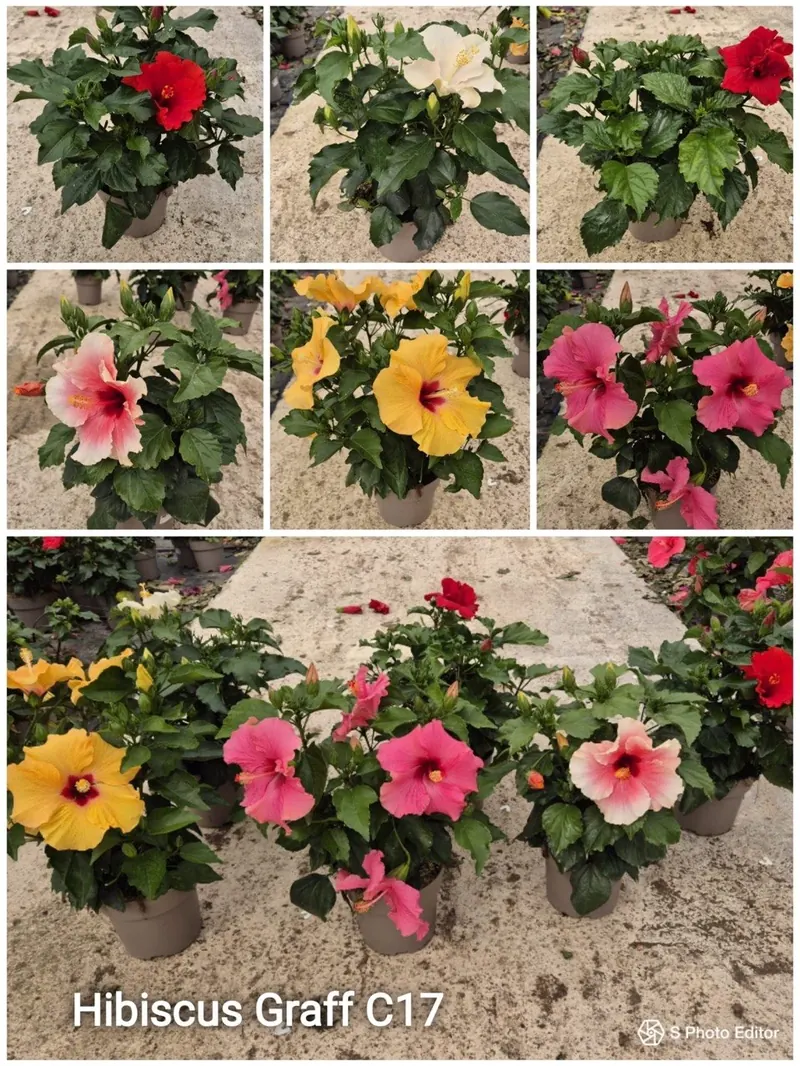
1. Giant-Flowered Hibiscus (Hibiscus rosa-sinensis)
- Container benefit: Produces dinner-plate blooms (15–20 cm diameter) from April through December.
- Care tip: Use containers of at least 40 cm diameter with expanded clay or volcanic gravel at the base for drainage. Feed monthly with high-potassium fertiliser.
2. Bougainvillea (Bougainvillea spectabilis)
- Container benefit: The more sun it receives and the tighter its root space, the denser its display of vibrant magenta, white, or orange bracts.
- Watering: Allow potting compost to dry between waterings; overwatering produces excess green foliage at the expense of flowers.
3. Prostrate Rosemary (Rosmarinus officinalis ‘Prostratus’)
- Container benefit: Cascades gracefully over container rims, emits a fresh pine fragrance, and withstands strong salt-laden sea breezes without leaf burn.
4. Dwarf Lantana (Lantana camara)
- Container benefit: Forms compact domes smothered in bright yellow, orange, or multi-toned flowers. Highly heat-tolerant and loved by butterflies.
5. Architectural Agave & Giant Echeveria
- Container benefit: Symmetrical geometric rosettes with built-in moisture reserves. Ideal for terracotta planters in corners without automatic irrigation.
6. Scented Citronella Geranium (Pelargonium graveolens)
- Container benefit: Highly aromatic foliage that naturally deters mosquitoes around covered dining terraces, with delicate pink blossoms in spring.
Practical Container Advice for Coastal Terraces
- Pot Materials: Choose terracotta, clay, or glazed ceramic over thin black plastic, which traps excessive root heat.
- Top Mulch: Spread a 2 cm layer of pine bark or polished white pebbles over the soil surface to reduce direct moisture evaporation by 50%.